McCallum, M.J.L., & Perry, A. (2018). Structures of Indifference: An Indigenous Life and Death in a Canadian City. Winnipeg: University of Manitoba Press.
McCallum, M.J.L., & Perry, A. (2018). Structures of Indifference: An Indigenous Life and Death in a Canadian City. Winnipeg: University of Manitoba Press.

Image Source: https://uofmpress.ca/books/detail/
structures-of-indifference
structures-of-indifference
Book Overview:
While Canada is praised worldwide for its focus on multiculturalism and our success in sustaining and progressing our society and economy towards inclusivity and equality, one group of people are consistently ignored within political, economic, and socio discussions -- Indigenous communities. In Structures of Indifference: An Indigenous Life and Death in a Canadian City by Adele Perry and Mary Jane Logan McCallum, the case of Brian Sinclair is used as a symbol of the mistreatment Indigenous people face in the Canadian system, with the lack of medical services resulting in Sinclair’s eventual death in a hospital due to neglect (Perry & McCallum, 2018). As we examine the consequences of decades of governmental oversight and lack of resources in indigenous communities, the history of the struggle between Indigenous people and colonial settlers point to deeply-rooted problems that allow for these unprotected citizens to fall through the ever-widening gap in the Canadian system. Unfortunately, Sinclair’s passing did not mitigate these issues in Canada since racial discrimination and social isolation towards Indigenous peoples still occurs. However, it did help bring this problem to light. Sinclair was sadly subject to poor policies and procedures of processing patients in the ER, but he was ignored and this cannot be over sighted (Perry & McCallum, 2018).
The book, fortunately, highlighted the beacon of hope that is “Jordan’s Principle”, which is a child prioritizing and needs-based approach used in Canada to guarantee that Indigenous children living on and off-reserve will receive equal access to government-funded social and health services (Perry & McCallum, 2018). This optimistic approach was sadly created after the death of a five-year-old boy in a Winnipeg hospital, which was a key focal point for Perry and McCallum to address (Perry & McCallum, 2018). The little boy, Jordan, alas had to deal with hardships at such a young age, including dealing with a rare muscular disorder, but also never residing in a home with his family (Perry & McCallum, 2018). This misfortune was a result of poor government service delivery since the federal and provincial governments could not reach an agreement on how to deliver proper home care to Jordan (Perry & McCallum, 2018). Certainly, “Jordan’s Principle” has helped to alleviate the unfairness in the healthcare system towards Indigenous communities (Perry & McCallum, 2018), but the novel also illustrated that there is still much more that needs to be done to solve the problems in this population in Canada.
About
the Authors:


Image Source: https://www.uwinnipeg.ca/indigenous/
weweni/weweni-2017/indigenous
-people,-archives,-and-history.html
Mary Jane Logan McCallum is an exceptional historian with great ambition to
unfold the stories of Aboriginal women. Her
work focuses on how Indigenous Peoples in the latter twentieth Century have
navigated certain social geographies including health, education, and labour. As
a member of the Munsee Delaware Nation and an associate professor in the Department of History
at the University of Winnipeg, she provides eloquent explanatory narratives about
the lives of Indigenous Peoples in Canada and has published several scholarly
books and articles contributing to the field of modern Aboriginal history. Her
first book entitled “Indigenous Women, Work and History: 1940-1980” (2014),
investigates the challenges that Indigenous women face in the workforce while
disclosing colonial discourses that are embedded in provincial education and
placement programs. Her current research project includes “Indigenous History
of Tuberculosis in Manitoba 1930-1980,” which is a CIHR-funded project and
where she is examining the history of tuberculosis in Manitoba regarding
Indigenous communities and how it has been managed. In her work, Mary McCallum
not only unveils and recognizes the impact of colonialism today in Canada but
also celebrates the cultures, traditions, languages, and resilience of
Indigenous communities.
The University of Winnipeg. Mary Jane McCallum. Retrieved from
http://www.uwinnipeg.ca/history/faculty-staff/mary-jane-mccallum.html
The University of Winnipeg. Mary Jane McCallum. Retrieved from
http://www.uwinnipeg.ca/history/faculty-staff/mary-jane-mccallum.html

Image Source: https://aptnnews.ca/2019/01/30/frequent-short-term-water-problems-new-norm-for-many-
first-nations/
Adele Perry is a Canadian
historian specializing in the history of migration, gender, and colonialism in
Western Canada during the nineteenth and twentieth Centuries and has been a
Distinguished Professor of History at the University of Manitoba. Notably, she
is an outstanding researcher having held a Tier I Canada Research Chair from
2003 to 2014, being Chair of the Canadian Committee on Women’s History, and the
past President of the Canadian Historical Association. Her knowledge and
expertise in the discipline of Social History is unparalleled which has
provided for an in-depth and critical analysis of Brian Sinclair’s story. She
has made important contributions to the field by publishing major works of
scholarship including “On the Edge of Empire: Gender, Race, and the Making
of British Columbia, 1849-1871 (2001), and Colonial Relations: The
Douglas-Connolly Family and the Nineteenth-Century Imperial World (2015).
Her current work focuses on the impact settler colonialism has had on the
provision of water by Winnipeg's municipality to the community, entitled “Aqueduct:
Colonialism, Resources and the Histories We Remember” (2016). As a scholar
and researcher, Adele Perry has played a crucial role in altering the national
narrative of colonization by examining it from Indigenous perspectives as well
as helping to elucidate how overlapping categories of identity impact
individuals and institutions.
The University of Manitoba. Adele Perry. Retrieved from
http://umanitoba.ca/faculties/arts/departments/history/members/perry.html
http://umanitoba.ca/faculties/arts/departments/history/members/perry.html
Canadian Historical Association. Executive, Council and Committees of the CHA. Retrieved
from https://cha-shc.ca/english/about-the-cha/executive-and-council-members.html
Reading Guide Questions:
Questions Answered by: Andrew Miller (AM), Daniela Veliz (DV), Rachel Wood (RW), and Stephanie Tai (ST)
1) What are some policies the Province of
Manitoba and/or the City of Winnipeg implemented that led to the
disenfranchisement in treatment that Indigenous Peoples experienced?
DV: The Manitoba Liquor Act which was passed
in 1928 inhibited permits to be issued to Indigenous Peoples and restricted
their access to spaces where alcoholic beverages were sold. This was an
explicit type of formal segregation which facilitated the emergence of specific
discourses to be made about Indigenous people in relation to the consumption of
substances. Additionally, the Intoxicated Persons Detention Act which allows
police to detain an individual without criminal charges, enables prejudices to
be formed against specific members of society, for them to be criminalized and
be denied health services as they are deemed to “just be intoxicated.” For
instance, this tenacious assumption about Indigenous people which has clearly
been woven into policies (as the ones mentioned above), can justify the
misrecognition of patients of not being in need of urgent care, which is
altogether racist and unwarranted. In the case of Brian Sinclair, he was
repeatedly misrecognized as intoxicated when that was not true, he had a serious medical problem that needed to be attended to (Perry & McCallum, 2018). Policies further
legitimate and perpetuate particular discourses which are important to
acknowledge as it influences how Indigenous people are treated and are
inhibited from accessing institutional services.
2) If the First Nations population had
similar access to hospitals and treatment, do you think the case of Brian
Sinclair would have occurred? Do you think equal access would mean equal
treatment? Why or why not?
ST: Yes, within the hierarchy of governmental
distribution of resources, there is still a smaller, community-level indifference
that would cause similar if not the same situation happening to areas of less
affluence. Indigenous areas already face major uncertainties when accessing
resources that the country promised all citizens, but the equalization of this
distribution remains questionable to those who do not have enough of a voice in
parliament. This idea that with the equalization of access to these
governmental resources would result in a more balanced healthcare system is
ideological when considering the already lacking in the funding of programs and
systems in place, with many already struggling to stay afloat within a barrage
of funding cuts and reductions in personnel, it will be even harder to establish
brand new resources to distribute to other parts of the country that see a
significantly smaller population, in turn also restriction the quality of
resources that these regions will receive.
3) As a social policy analyst, what changes
would you make today in order to improve how accessible institutional services
are for Indigenous communities across Canada?
AM: I believe that if the First
Nations population had equal access to treatment as regular Canadians, I still
believe the case of Brian Sinclair would have occurred. The paradigm that Indigenous populations are understood as has a root of systemic prejudice.
Historically they are viewed in a way where their struggles are not highlighted
and atrocities are overshadowed. Additionally, the structure of the city of
Winnipeg and the hospital perpetuate colonial ideologies, in hidden ways such
as the street names. I believe changing social policy can only make small
changes in the way indigenous people are treated in the healthcare system.
Social policy is only as powerful as its interpretation and with racist
historical ideology that has roots in individual minds, I believe the quality
of care would still be second hand to those of white Canadians.
4) While reading, did you find a change in the narrative in the description of Indigenous communities’ experience in Winnipeg?
And if so, does that change how you understand the policy implications that
affect them?
RW: In this part of the novel, I felt that it was somewhat
similar to other parts of the novel, in particular, the Brian Sinclair section.
However, I can see why it could be interpreted as a different narrative than
other sections. More specifically, the Indigenous communities in Winnipeg in
the present seem to experience similar instances of racism and violence as the
Indigenous populations endured in residential schools (Perry & McCallum, 2018). As mentioned in the
novel, the child welfare system in Winnipeg is similar to residential schools
because of up to ninety percent of children in some sort of care experience
similar levels of violence and neglect (Perry & McCallum, 2018). Also, the hospitals seem to exhibit
comparable treatment of Indigenous people as colonialism did due to the
regulations and neglect these patients encounter. This revelation helped me to
better understand the policy implications because I was unfamiliar with the
Indigenous communities experiencing harsher conditions in Winnipeg. I would
have thought since a majority of the population was Indigenous, the provincial
government would prioritize their health and wellbeing more.
5) How has your perspective changed/not
changed as a result of reading the novel? Additionally, if you had the
opportunity to add/remove something from the book what would It be?
AM: My perspective has slightly changed as a
result of reading the book. I am more aware of the bias I have internalized
from a child regarding indigenous people. Being more aware of my bias
challenges me to accept my limitations on my real knowledge of indigenous
people and culture and how it is my personal responsibility to inform myself on
this subject. An action step that I will take is that when I begin to think
about my initial thoughts around indigenous people, I will question the
validity and how I could be potentially wrong with my thinking. Overall this
book provides insight on the limitations I have in the subject of indigenous
policy in Canada, and it will remain a starting ground for future knowledge.
DV: This book has furthered my understanding
on how colonization is perpetuated in the Canadian healthcare system by
limiting the quality and access of services to Indigenous Peoples. Canadians
praise themselves for having a public healthcare system that provides coverage
for healthcare needs, that is inclusive and equal to all who are Canadian. It
is easy to be blinded by such narratives, while it is great that a large
quantity is publicly funded, it nevertheless denies the discrimination that
occurs in its practices towards Indigenous Peoples as informed by this book.
This book has helped me gain a better understanding of the structural
barriers that Indigenous Peoples face in their daily lives; just for being a
visible minority, particularly an Indigenous individual, one is not treated the
same as other patients. This book has shown me the importance of being aware of
ethnocentric discourses that are entrenched in Canadian policies as they
institutionalize discriminatory narratives. Moreover, it has proved that some
policies must be amended in order for equal treatment in the healthcare system
to be obtained. Although in the conclusion section, TRC’s Call to Action is
mentioned regarding how to address the role that healthcare has played in
colonialism, it would have been greatly beneficial for the authors to
explicitly delineate the specific measures and policies that are necessary to
abolish racism and colonialism, in addition to how Indigenous communities that
are subject to being treated differently can ensure to have a greater voice.
ST: This book was an introduction for me into
the lives of indigenous citizens in our country, and the inequalities that they
face even in a modern era that calls for equality for all. The lack of services
they have access to should be a concern to not just the government, but private
citizens as well who have the power to change their neighborhoods and
communities to be more inviting and inclusive of these indigenous individuals.
While the subject of food insecurity is popular when talking about the
hardships that indigenous people in the North of Canada face, the lack of
access to healthcare, Brian Sinclair faced should be of greater importance as
one of the major points in our constitution. More should be done and I will now
be more vigilant of the Indigenous inequalities in the country when
participating in citizenship roles and daily current event monitoring.
RW: From my perspective, I would say the novel, if anything, has helped to further build my understanding of the treatment of the Indigenous communities in Canada. I wouldn’t say my opinion has changed but rather broadened. As a First Nations individual myself, I already had an idea of the negative experiences endured by my culture. I knew that healthcare was always never prioritized for Indigenous communities, but that it is also incredibly difficult to receive equitable healthcare services on reserves and in remote locations, such as Nunavut and Yukon. My perspective was altered somewhat after reading the Winnipeg section of the novel because it provided an enlightening point of view of the tumultuous experiences in Winnipeg within hospitals, prisons, and the child welfare system. I was really surprised to learn that Indigenous communities appear to suffer worse conditions in Winnipeg, where a high proportion of the population is Indigenous than in other provinces. I would have thought their health and wellbeing was more important in provinces that had a higher population of Indigenous people, but it is truly hard to hear that most provinces are similar in this regard. To make the novel more powerful and influential, I would have added a chapter about the cases of the missing Indigenous women in Canada since this is a very controversial and important topic within the Indigenous community. It is crucial to highlight this because it shows another side as to how the Indigenous population is not taken seriously and is neglected since police have not solved many of these cases and no one has found a solution to prevent Indigenous women from going missing.
RW: From my perspective, I would say the novel, if anything, has helped to further build my understanding of the treatment of the Indigenous communities in Canada. I wouldn’t say my opinion has changed but rather broadened. As a First Nations individual myself, I already had an idea of the negative experiences endured by my culture. I knew that healthcare was always never prioritized for Indigenous communities, but that it is also incredibly difficult to receive equitable healthcare services on reserves and in remote locations, such as Nunavut and Yukon. My perspective was altered somewhat after reading the Winnipeg section of the novel because it provided an enlightening point of view of the tumultuous experiences in Winnipeg within hospitals, prisons, and the child welfare system. I was really surprised to learn that Indigenous communities appear to suffer worse conditions in Winnipeg, where a high proportion of the population is Indigenous than in other provinces. I would have thought their health and wellbeing was more important in provinces that had a higher population of Indigenous people, but it is truly hard to hear that most provinces are similar in this regard. To make the novel more powerful and influential, I would have added a chapter about the cases of the missing Indigenous women in Canada since this is a very controversial and important topic within the Indigenous community. It is crucial to highlight this because it shows another side as to how the Indigenous population is not taken seriously and is neglected since police have not solved many of these cases and no one has found a solution to prevent Indigenous women from going missing.
Complementary Reads:
1. For those interested in the lack of health services for First Peoples on a global scale: All Our Relations: Finding the Path Forward by Tanya Talaga
 |
| Image Source: https://houseofanansi.com/blogs/anansi/2018-cbc-massey-lectures |
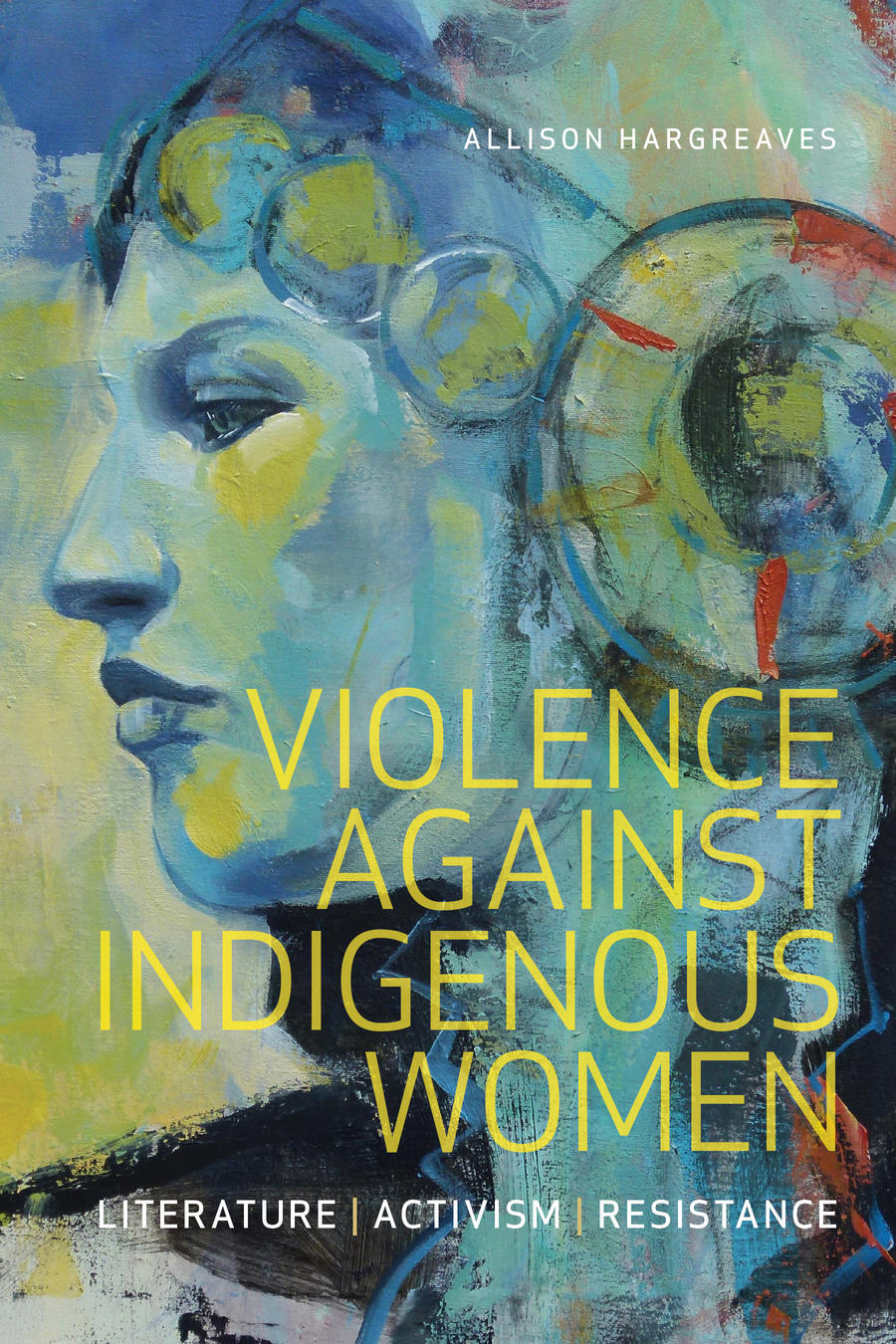
2. For those interested in failed policies that have perpetuated Indigenous women to be targets of violence: Violence Against Indigenous Women: Literature, Activism, Resistance
 |
| Image Source: https://www.wlupress.wlu.ca/Books/V/Violence-Against-Indigenous-Women |
Structures of Indifference Page Written By: Andrew Miller, Daniela Veliz, Rachel Wood, and Stephanie Tai
Overview: Stephanie Tai and Rachel Wood
About the Authors: Daniela Veliz
Reading Guide Questions Written By: Andrew Miller

No comments:
Post a Comment